by Charlene Brooks, CEO at Belfast Healthy Cities
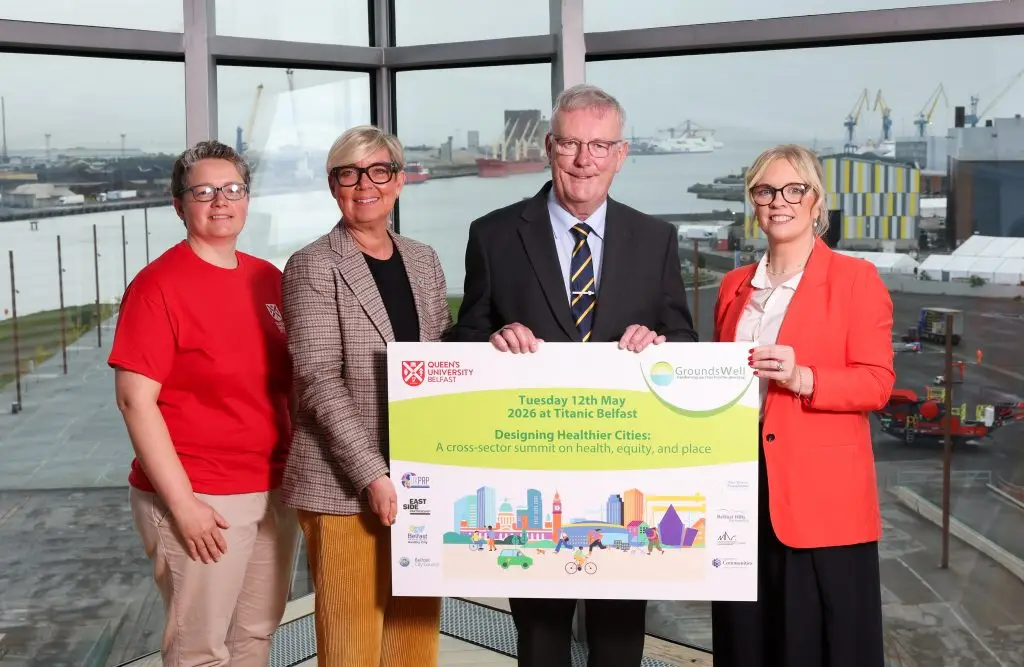
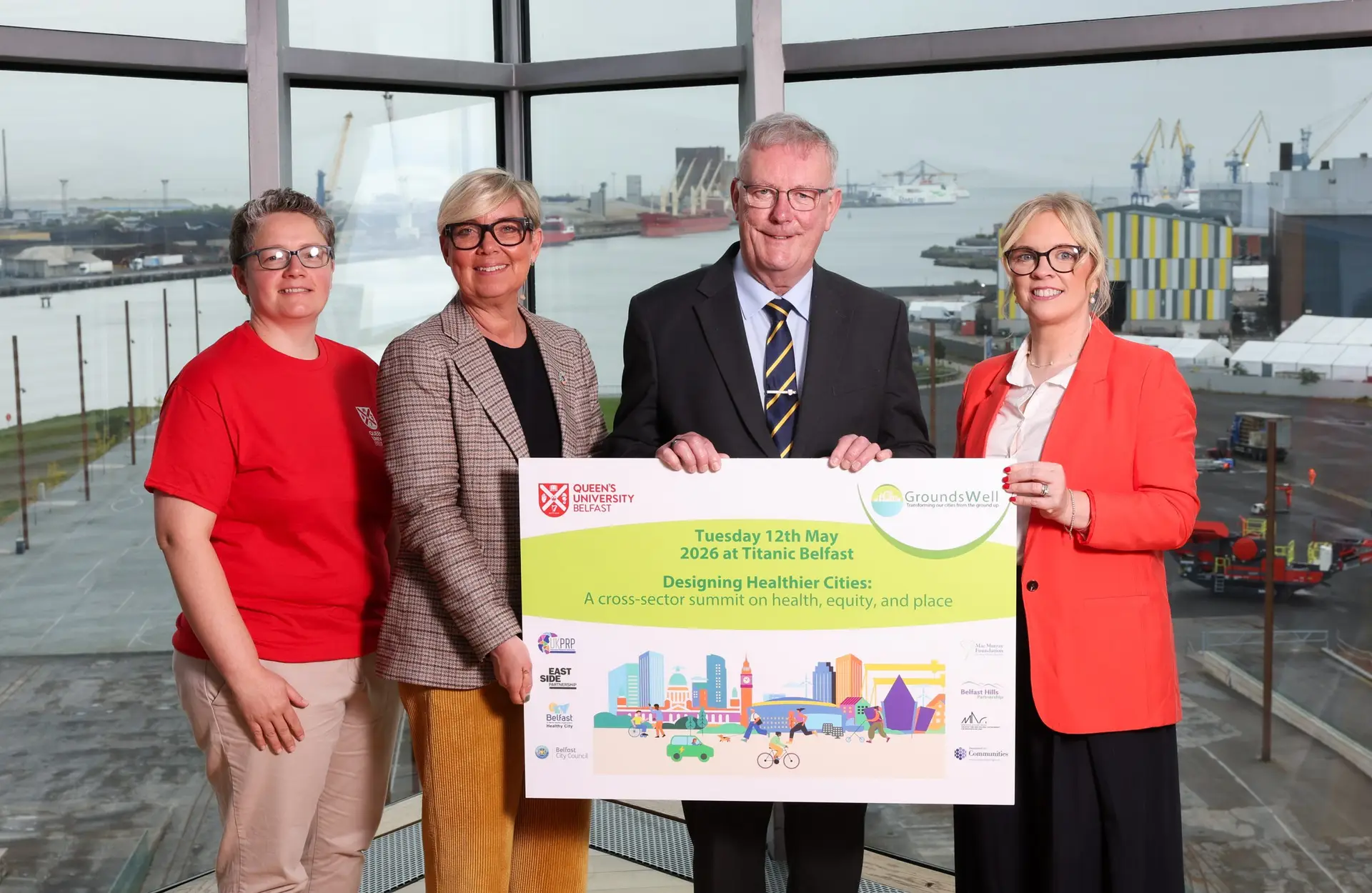
Recently I had the pleasure of attending the Designing Healthier Cities summit organised and led by the GroundsWell team at Queen’s University Belfast that brought together an impressive range of speakers and presentations. We were delighted at Belfast Healthy Cities to support the event, and it was great to see Jacqueline, our Healthy City Coordinator, sharing our work as part of the programme.
GroundsWell set out the compelling evidence on the links between our environment, inequality and health: Even relatively small increases, as little as 1%, in green space availability are associated with significant reductions in preventable mortality (37-42%), with the greatest benefits seen in communities experiencing the highest levels of inequalities.
A real highlight was the attendance and input from Kira Fortune, Regional Advisor at the World Health Organization. Her keynote grounded the day in a strong global context, but what I particularly valued was how clearly she connected that global evidence to the reality of what that means at a city level context.
It was also fantastic to see Belfast recognised during her input. As a long standing designated member of the WHO European Healthy Cities Network for over 35 years, Belfast continues to play an important role and it’s encouraging to see how that long-standing commitment is reflected in the work happening across the city.
The summit was formally opened by the Health Minister Mike Nesbitt MLA, who highlighted the importance of partnership working and recognised the contribution of Belfast Healthy Cities in supporting this agenda across the city. His remarks reflected a strong understanding of how place shapes health and health equity, particularly the role of green and blue spaces, but also the wider need to improve access to health and social care, community services and neighbourhood-based support. That joined-up thinking is exactly what’s needed if we are serious about tackling inequalities.
There were so many strong contributions across the day. I thought that the presentation from the Mae Murray Foundation on inclusive beaches was particularly powerful, really challenging us to think about what inclusion looks like in practice, and who our public spaces are designed for. There was also an important focus on Ending Violence Against Women and Girls, with strong evidence presented and an engaging panel discussion exploring how the design of our public, green and open spaces can support safety, inclusion and wellbeing for all.
Many of the conversations throughout the day reflected exactly the kind of innovative, practical thinking that can help shape healthier, safer and more inclusive cities in the future. It was encouraging to hear so many examples of how learning, collaboration and lived experience can help influence real change.
Those are also the kinds of ideas and approaches we hope to support through this year’s Belfast Healthy Cities Explorer Bursary, which has recently opened for applications and focused on the theme of Ending Violence Against Women and Girls.
Dr William Bird’s keynote was equally impactful. His passion and clarity in linking nature, physical activity and health really resonated, particularly his focus on early intervention and the importance of creating child-friendly environments from the outset. I look forward to working with him further to integrate more of this learning into our work in Belfast.
For me personally though, one of the standouts of the day was hearing from P7 pupil Yara and her teacher Ruth, from Knockmore Primary School, who spoke about their experience of the Healthy Places, Healthy Children programme. Their enthusiasm, honesty and pride in what they had achieved was genuinely inspiring. The green space they have developed in their school, supported through the GroundsWell Innovation Fund, is a brilliant example of what can happen when children and young people are given the opportunity to shape their own environments.
The Innovation Fund inputs more broadly, including the Healthy Places Healthy Children work led by Belfast Healthy Cities, really brought the day back to what matters: turning ideas and evidence into real, tangible change in communities.
What stood out throughout the day was the diversity of people in the room and the level of engagement. There was a real sense of shared purpose bringing together voices from health, planning, design, research, community and policy, all recognising that no one sector can do this alone.
Belfast now has a real opportunity to lead in this space and this event showed clearly that the partnerships, evidence and ambition are already in place. The focus must now be on turning that collective energy into sustained, meaningful change for and with our neighbourhoods and communities.