Cardiovascular disease is something most of us have heard about, but many people don’t realise just how significant its impact is, both globally and right here at home. It remains the world’s leading cause of death, claiming more than 20 million lives every year. In Northern Ireland alone, circulatory disease accounted for nearly a quarter of all deaths in 2023. These aren’t just numbers; they represent families, communities and lives changed forever.
That’s why Cities@Heart, a new public‑private collaboration, feels so timely and so important. The initiative brings together cities across Europe to improve awareness, prevention, early detection and management of cardiovascular disease (CVD). Belfast is one of seven cities selected to take part, working alongside the World Health Organization and 34 international partners from academia, industry and health organisations.
At its core, Cities@Heart is about taking evidence-based strategies and making them work in real urban settings, in places where people live, work and travel. And that matters, because cardiovascular disease doesn’t affect everyone equally.
Why Cities? Why Now?
Urban areas often carry a heavier burden of cardiovascular disease, and Belfast is no exception. When we look at preventable deaths from CVD in people under 75, the Northern Ireland average sits at 26.9 per 100,000. In Belfast, that figure jumps to 35.8 per 100,000 – around a third higher.
The picture becomes even clearer when we consider deprivation. Hospital admissions for circulatory conditions are almost 20% higher in the most deprived areas compared with the least deprived. Even more stark, under‑75 death rates from circulatory disease are more than double – 132% higher – in the most deprived communities.
These statistics tell a powerful story: cardiovascular disease is not only a health issue, but a health equity issue. Where you live, your income, your access to services and your environment all shape your risk.
A Collaborative Effort Across Europe
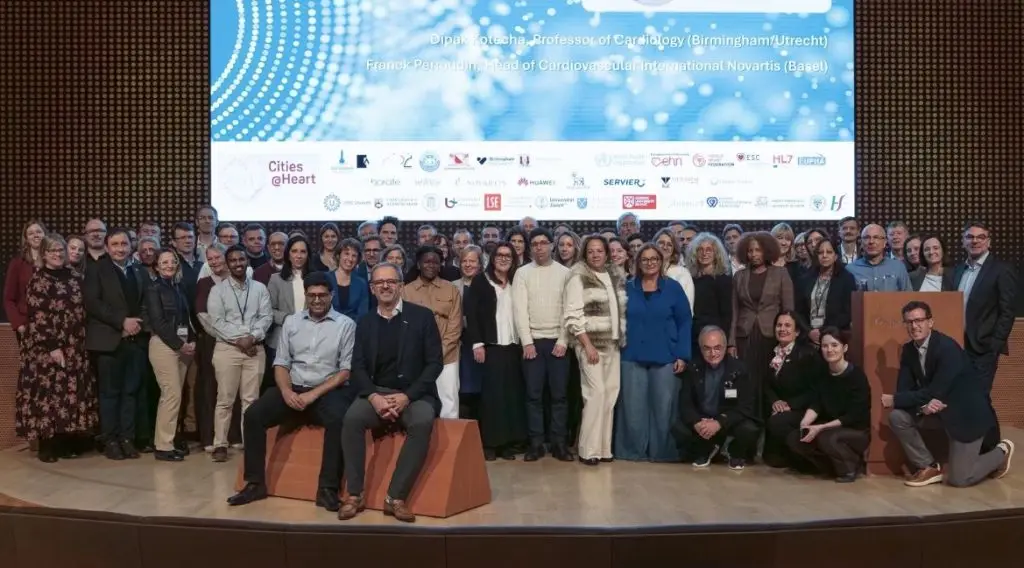
January 2026 marked the official launch of this five‑year project, with partners gathering at the Novartis Campus in Basel, Switzerland. It was the first chance for everyone, from Healthy City Coordinators to digital innovators, to meet face‑to‑face.
For Belfast, the meeting was an opportunity to connect with counterparts from across Europe who are facing similar challenges. Many of us are navigating new territory, and having a network of peers to learn from and collaborate with is invaluable.
One of the strongest themes to emerge from the discussions was the essential role of municipalities. Cities understand their communities in a way that national or international bodies simply can’t. They see the day‑to‑day realities of health inequalities, the barriers people face, and the social determinants that shape outcomes. Their involvement ensures that the project remains grounded in real-world experience.
Putting People at the Centre
A recurring message throughout the Basel meeting was simple but profound: people are more than data points.
While statistics help us understand the scale of the problem, they don’t tell us why awareness of cardiovascular disease is low in some communities, or why certain groups struggle to access prevention programmes. To answer those questions, we need to listen.
Meaningful engagement with communities will be central to Cities@Heart. That means understanding the lived experiences of people across Belfast. What gets in the way of accessing health information, what motivates behaviour change, and what kinds of support feels relevant and accessible.
If we want to design interventions that work, they must be shaped with people, not just for them.
Innovation and New Partnerships
Another exciting aspect of Cities@Heart is the opportunity to work with sectors that city teams don’t always collaborate with. In Basel, partners ranged from academic researchers to private sector organisations and digital technology specialists.
Digital innovation will play a major role in the project, from new ways of gathering data to developing tools that support prevention and early detection. Emerging technologies have huge potential to improve health outcomes, and it was encouraging to see experts in this field actively involved.
Of course, bringing together 34 partners across seven cities is no small task. Collaboration on this scale is both exciting and complex. Organisations that might never normally cross paths are now working side by side. That means taking time to understand each other’s priorities, approaches and language.
Developing a shared understanding will be essential to ensuring that everyone is aligned around the same goal: improving cardiovascular health in cities.
Looking Ahead
The Basel meeting was just the beginning, but it set the tone for what lies ahead. By building strong relationships early and committing to collaboration and co‑production, the Cities@Heart consortium is laying the foundations for meaningful, long‑term impact.
The vision is ambitious but achievable: a future where awareness, prevention, early detection and management of cardiovascular disease are accessible to everyone living in urban areas, supported by the best of what modern health technology can offer.
For Belfast, this project represents an opportunity not only to improve cardiovascular health, but to tackle the inequalities that sit beneath it. Over the next five years, we’ll be working with partners across Europe to test new ideas, learn from one another and create approaches that can make a real difference in people’s lives.
Cities@Heart is about more than reducing statistics. It’s about giving people in our city the chance to live longer, healthier lives and ensuring that no community is left behind.